China Danxia
中国丹霞
- 分类: 旅游
- ID: 1864333801819013121
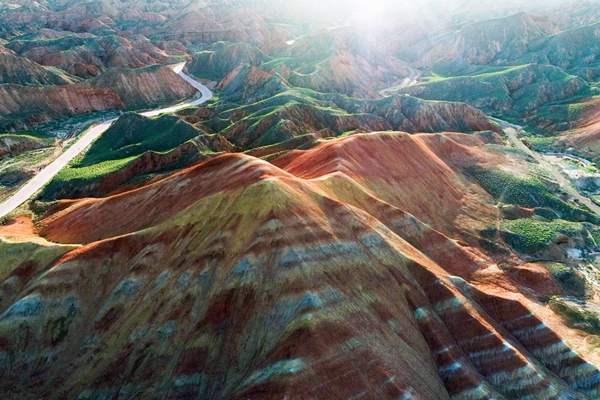
Home CategoryTourismChina DanxiaPlay5.5 minsDanxia landform is a unique type of landscape found in China, characterized by its spectacular red cliffs and a variety of erosional landforms such as natural pillars, towers, ravines, valleys, and waterfalls. The inscribed site on the UNESCO World Heritage List comprises six areas located in the sub-tropical zone of Southwest China: Chishui (Guizhou province), Taining (Fujian province), Langshan Mountain (Hunan province), Danxia Mountain (Guangdong province), Longhu Mountain (Jiangxi province), and Jianglang Mountain (Zhejiang province).ShareCatalogue1. Brief Introduction2. Natural Heritage3. Six Component PartsCategory of Site: Natural site
Brief Introduction
Danxia landform is a unique type of landscape found in China, characterized by its spectacular red cliffs and a variety of erosional landforms such as natural pillars, towers, ravines, valleys, and waterfalls. The inscribed site on the UNESCO World Heritage List comprises six areas located in the sub-tropical zone of Southwest China: Chishui (Guizhou province), Taining (Fujian province), Langshan Mountain (Hunan province), Danxia Mountain (Guangdong province), Longhu Mountain (Jiangxi province), and Jianglang Mountain (Zhejiang province), spanning from Guizhou province in the west to Zhejiang province in the east.
These rugged landscapes have been shaped by a combination of specific rock sequences, tectonic activity, climatic conditions, and erosional processes. They have helped to conserve sub-tropical broad-leaved evergreen forests and host a diverse range of flora and fauna, with about 400 species considered rare or threatened. In August 2010, China Danxia was inscribed on the World Natural Heritage List.
Natural Heritage
Due to the combined forces of endogenic (tectonic uplift) and exogenic (climatic, erosion, weathering) processes, along with other factors, the Danxia landforms have developed in red sedimentary sequences continuously from the Neogene period to the present. The six component areas represent the most significant examples of Danxia landforms, ranging from "least eroded" to "most eroded." These sites illustrate the variety of landforms and the forces and processes that shaped them, along with their associated landscapes.
China Danxia is an impressive and unique landscape of great natural beauty, featuring a wide variety of well-developed red-bed landforms such as peaks, towers, mesas, cuestas, cliffs, valleys, caves, and arches. This landscape showcases different aspects of the physical terrain, formed from reddish conglomerate and sandstone in a warm, humid monsoon climate. The six component areas display a clear sequence of landform development from "young" to "mature" to "old age," with each site exhibiting characteristic geomorphologic features of its respective stage.
Six Component Parts
Danxia Mountain (Guangdong province)
Danxia Mountain, located near Shaoguan in northern Guangdong province, is known for its reddish sandstone that has eroded over time to form a range of mountains with curvaceous cliffs and unusual rock formations. It is a renowned scenic area and a UNESCO Global Geopark. The mountain range features several temples and scenic walking paths, with a river winding through the area offering boat trips to visitors.
Taining Danxia (Fujian province)
Taining Danxia consists of two main areas: Golden Lake and Shangqing Stream, covering a total area of 234.88 square kilometers. Taining Danxia is a prime example of youthful, low-altitude mountain and canyon-type Danxia landforms in China's subtropical humid region. It holds a unique and irreplaceable position in the "China Danxia" project due to its distinctive features, such as the densest network of valleys, the most developed cliff caves, the most intact ancient planation surfaces, the richest rock cave culture, and the most magnificent water Danxia.
Longhu Mountain (Jiangxi province)
Longhu Mountain, located in Jiangxi province, is one of the birthplaces of Taoism. It is home to many Taoist temples, including the Shangqing Temple and the Mansion of the Taoist Master. The mountain is one of the Four Sacred Mountains of Taoism and holds significant cultural and religious importance.
Langshan Mountain (Hunan province)
Langshan Mountain, a National Geological Park in Hunan province, is famous for its unique Danxia landform. The mountain features dark red rocks with grotesque shapes, providing a stunning sight for visitors. Located in Xinning county, Langshan Mountain covers an area of 108 square kilometers and includes over 500 scenic spots, such as Tianyi Lane, Chili Peak, and Fuyi River.
Chishui Danxia (Guizhou province)
The Chishui Danxia, formed by the Cenozoic uplifts of the Himalayan Orogeny and the Asian Monsoon, showcases the diversity of Danxia landforms. The area has not been affected by the last glaciations and features tall forests with a variety of vegetation. Chishui Danxia is noted for its high biodiversity and serves as a habitat for many rare and endangered species.
Jianglang Mountain (Zhejiang province)
Jianglang Mountain is renowned for its grand stone formations, including the unique Danxia peaks and the narrowest pass. The scenic spot also features the ancient Kaiming Temple, Jianglang College, and the largest stone carving of Chairman Mao's handwriting on a cliff. The area is rich in cultural and natural attractions.
These six areas collectively represent the most significant examples of Danxia landforms, showcasing the natural beauty and geological diversity of this unique landscape. Article reference1. China Danxia. chinadaily.com.cn. 2019Photo Gallery(3 pictures)CategoriesTourismTagWorld Heritage in ChinaNatural WonderCatalogue1. Brief Introduction2. Natural Heritage3. Six Component Parts- - - []








